Contrasting Gems - Vintage 10K Gold Natural Blue Spinel & Rose Cut Diamond Ring (VR1065)
Rarities Antique Jewelry
Contrasting Gems - Vintage 10K Gold Natural Blue Spinel & Rose Cut Diamond Ring. This unique ring is crafted from 10K yellow and white gold, hallmarked K10 for 10K gold. The ring features one natural oval brilliant blue spinel, 10 natural rose cut diamonds, classic styling, and quality craftsmanship. The gallery on this ring is expertly triple-claw-set with a beautiful cobalt blue spinel, which is enhanced by glowing diamond arched shoulders, and a very pretty raised decoration. The ring has a smooth, and polished shank, which allows for a comfortable fit, and easy sizing. This unique vintage ring would make a great addition to any fine jewelry collection.
Note: Appraisal included with the ring. Appraised at $5470.00 (Tax Excluded)
History: The earliest diamonds were found in India in 4th century BC, although the youngest of these deposits were formed 900 million years ago. A majority of these early stones were transported along the network of trade routes that connected India and China, commonly known as the Silk Road.
The rose cut originated in the 1500's and was commonly used through the Georgian and Victorian eras. Like other antique diamond cuts, they were cut by hand and meant to dazzle under candlelight. Their large, wide facets performed exquisitely in low light conditions.
The rose cut is considered to be one of the oldest diamond cuts. Rose cut diamonds gathered popularity from their creation in the 1500s right through to the late 19th Century.
You cannot look at rose cut diamond jewelry factually with a recut formula in mind, its value is object driven. Rose cuts are a greater challenge in estimating weight once they have been mounted (especially if they are closed back). These rose cut diamonds are hand cut, which makes them so special . This is a rare find.
The rose cut diamond is closed back ( a characteristic of Georgian and early Victorian jewelry). Closed back jewelry should never be immersed in liquid. To clean, wipe the ring gently with a damp (not saturated) cloth with warm water, and pat dry with soft cloth.
Today, they are seeing a renaissance and are highly sought-after.It can be challenging to find a rose cut that you'll love because they are so rare in the market. - Because the rose cut diamond is cut by hand, there will often be tiny imperfections or asymmetries to the facets.
Many are already aware of history behind the 'ring finger,' and with the romanticism of the 'Rose Cut', the cut became a symbol for love as the ring would be “wrapped around the part of the body that connected directly to the heart”
Natural blue spinel has a long history of being mistaken for sapphire and ruby, with famous examples like the "Black Prince Ruby" in the British Crown Jewels. It has been mined for over a thousand years from regions like Sri Lanka, Afghanistan, Myanmar, and Vietnam and was historically valued in Eastern cultures as a talisman of power and protection. Due to its color-matching with more famous gems, its unique identity was only recognized with modern gemological science.
Ancient Appreciation: Spinel has been around for over a thousand years, with regions like Sri Lanka and Myanmar being historically important sources.
Cultural Significance: In ancient times, blue spineless highly prized, and often referred to ad 'Balas Ruby' It was associated with nobility and power, and was used to adorn the jewelry of Kings and emperors. Eastern cultures also valued it as a talisman, believing it offered protection.
Modern Recognition: With the development of modern geologists techniques, the distinction between blue spinel and sapphire became clear, leading to spinel being appreciated for its own unique qualities.
GEOLOGICAL HISTORY:
Formation: Blue spinel forms under high pressure and intense heat, a process involving the crystallization of magnesium, aluminum. and oxygen. The blue colour comes from cobalt ions replacing aluminum in the crystal structure.
Key Ingredients: The formation of cobalt-blue spinel requires specific geological conditions and the presence of cobalt, which can be introduced during sediment deposition or metamorphism.
Countries of Origin: Major sources of natural blue spinel include Myanmar, Sri Lanka, Madagascar, Tanzania, and Vietnam. Myanmar is particularly renowned for its high-quality cobalt-blue and vivid blue stones.
Some spinel colors are more rare and valuable than others. In general, red spinel is the most desirable, followed by fine cobalt-blue spinel, then by vibrant hot pink and vivid orange stones. Violet and bluish purple to purple, or lavender, stones tend to be less attractive, and less in demand than other, rarer colors.
Blue is one of the rarest colors of spinel and is typically the most desirable color after red. The presence of cobalt at sufficient concentrations can cause a vibrant, saturated blue color that can best even the color of the finest sapphire.
Gold was generally used for a couple thousand years solely to create things such as jewelry and idols for worship. This was until around 1500 BC when the ancient empire of Egypt, which benefited greatly from its gold-bearing region, Nubia, made gold the first official medium of exchange for international trade.
Measurements: Face of the Ring 14.50 mm x 14.50 mm
Stone size: Blue Spinel (Natural) 8.03 carats Diamonds .20 carats
Weight: 4.92 grams
Ring Size: 6 1/4
Condition: Excellent Note: When cleaning this blue spinel ring it should be treated the same way as an emerald. To clean dip the ring in a mixture of mild detergent and water, clean with soft toothbrush, rinse with warm water,, and dry immediately. No ultrasonic machines, or harsh chemicals.
Origin: Europe
Date: Circa 1980
You may also like...
-
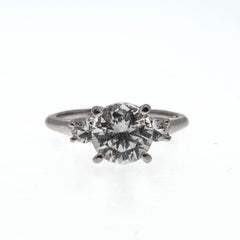 A Classic - Vintage 10K White Gold Cubic Zirconia Ring (VR558)
$495.00
A Classic - Vintage 10K White Gold Cubic Zirconia Ring (VR558)
$495.00
-
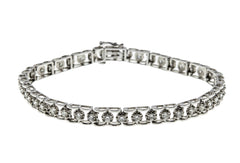 A Classic Beauty - Vintage 10K White Gold Diamond Tennis Bracelet (VB103)
$3,695.00
A Classic Beauty - Vintage 10K White Gold Diamond Tennis Bracelet (VB103)
$3,695.00
-
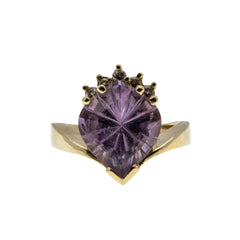 A Cut Above - Vintage 14K Gold Fancy Cut Natural Amethyst & Diamond Ring (VR917)
$1,695.00
A Cut Above - Vintage 14K Gold Fancy Cut Natural Amethyst & Diamond Ring (VR917)
$1,695.00
-
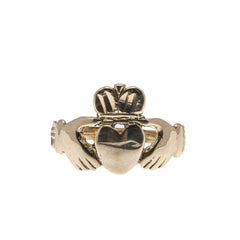 A Ghrá - Vintage 10K Gold Claddagh Ring (VR567)
$395.00
A Ghrá - Vintage 10K Gold Claddagh Ring (VR567)
$395.00
-
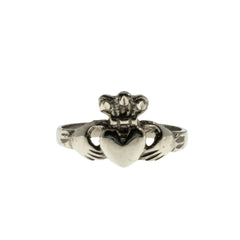 A Ghrá - Vintage 10K White Gold Irish Claddagh Ring (VR969)
$395.00
A Ghrá - Vintage 10K White Gold Irish Claddagh Ring (VR969)
$395.00
-
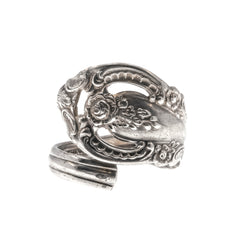 A Spoon Full Of Sugar - Vintage Silver Plate Community Spoon Ring (VR545)
$125.00
A Spoon Full Of Sugar - Vintage Silver Plate Community Spoon Ring (VR545)
$125.00