Morpho - Art Deco English Sterling Silver Butterfly Wing Pendant & Chain (ADP026)
Rarities Antique Jewelry
Morpho - Art Deco English Sterling Silver Butterfly Wing Pendant & Chain. This beautiful pendant is crafted from sterling silver, hallmarked Sterling Silver, England. The chain is crafted in 925 sterling silver, hallmarked 925, and ITALY. The pendant features one genuine Brazilian butterfly wing specimen, Art Deco era styling, and quality craftsmanship. This wonderful pendant showcases a beautiful specimen of a butterfly wing, which displays a brown, and purple colour, however in a different light intensity the purple changes colour to a vibrant turquoise blue (see the hand-shot photos). The wonderful butterfly specimen is preserved and protected by a glass cover. The gallery on this pendant exhibits an exquisite intricate border, and a floral bale. The pendant is accompanied by an anchor chain, which is substantial, and looks stunning with the precious pendant. This Art Deco era piece, would make a fantastic addition to any antique/vintage jewelry collection.
History: Morpho butterfly wings were most popular in jewelry and decorative art during the 1920s and 1930s following the 1924 British Empire Exhibition.
Peak Era: The 1920s–1930s, with some pieces continuing into the mid-20th century (1950s–1960s).
Key Figures: English jeweler Thomas Lyster Mott (TLM) helped popularize the trend at the 1924 British Empire Exhibition, and Shipton & Co. patented picture-form wing designs in 1922 before acquiring Mott's business.
Earlier Roots: Early use dates back to the late Victorian era (late 1800s), and Indigenous groups along the Rio Negro in Brazil historically used collected wings to decorate ceremonial masks.
Common Styles: Usually set in sterling silver under glass as brooches, pendants, and clasps, often paired with reverse-painted tropical scenes.
Silver was first found in large amounts around 5000 BC, when prehistoric people dug the first copper mines. ... Large-scale silver mining had developed in Anatolia by 3000 BC. This was to meet the demand from the first ancient city states, which used the metal as a common medium of exchange.
The term sterling silver denotes any silver alloy in which pure silver makes up at least 92.5 percent of the content. One theory is that the word sterling comes from the name Easterlings—coiners from east German states brought to England during the reign of Henry II (1154–89) to improve the quality of the coinage.
Measurements: Pendant 60.00 mm x 15.00 mm Chain: 18'
Weight: Pendant 4.70 grams Chain: 8.10 grams
Condition: Very Good Note: Slight age related patina to the back of the pendant. Chain: Pristine.
Origin: Pendant: England Chain: Italy
Date: Pendant Circa 1920 Chain: Circa 1990
You may also like...
-
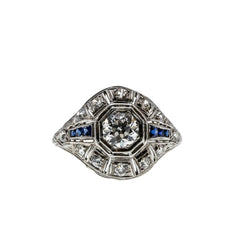 1920s Rarity - Art Deco Platinum Natural Old European Cut Diamond & Sapphire Ring (ADR301)
$6,495.00
-
 An Heirloom Proposal - Art Deco Platinum Natural 'Old European Cut' Diamond Solitaire Engraved Engagement Ring (ADR284)
$4,995.00
-
 Art Deco Flapper Sautoir Ruby Red Czech Crystal Necklace
$175.00
-
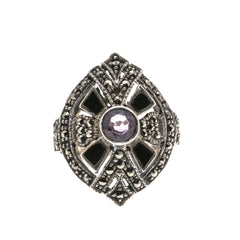 Art Deco Geometry- Vintage Sterling Silver Amethyst, Onyx & Marcasite Ring
Sold
-
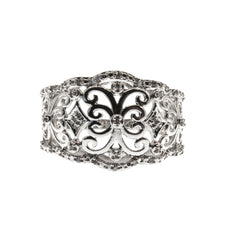 Art Deco Revival - Estate Sterling Silver Natural Diamond Ornate Ring (ER004)
$395.00
-
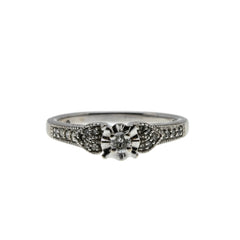 Art Deco Revival - Vintage 10K White Gold Natural Diamond Milgrain Ring (VR1166)
$1,295.00