Recently Sold (VN140)
Rarities Antique Jewelry
Sorry, this item is Sold
South Western - Vintage Sterling Silver Turquoise & Porcupine Quill Necklace. This gorgeous necklace is crafted from sterling silver (unmarked, but tested). Featuring a genuine pear shaped turquoise, two genuine round shaped turquoise, 47 genuine raw turquoise gems, porcupine quills, Native American styling, and quality craftsmanship. This beautiful necklace consists of an ancient technique called 'loop and wire' chain, which is interspaced with turquoise gems. The chain is connected to a drop, which consists of beautiful blue/green turquoise and articulated porcupine quills. The quills are attached to silver loops, and silver dangles, which allow the quills to have nice movement. The clasp is an antique hook style, which is substantial, and in perfect working order. This vintage necklace looks stunning when worn, truly a perfect addition to any jewelry collection.
History: The earliest evidence of turquoise gemstones comes from ancient Egyptian tombs, which contain elaborate turquoise jewelry dating back to 3000 BCE. Egyptians set turquoise in gold necklaces and rings, used it as inlay, and carved it into scarabs.
Turquoise has been used by southwest American Indian tribes since 200 B.C. The turquoise stone was used in religion, ceremonies, art, trade, treaty negotiations as well as jewelry. Today, turquoise jewelry is being made by Navajo, Zuni, Hopi and Santo Domingo Indians as well as other tribes in our American Southwest.
Porcupine quillwork is an art form unique to North America. Before the introduction of glass beads, quillwork was a major decorative element used by the peoples who resided in the porcupine's natural habitat, which included indigenous peoples of the Subarctic, Northeastern Woodlands, and Northern Plains.
The story of silver mining began about 5,000 years ago. Silver was first mined around 3,000 BCE in Anatolia, now located in modern-day Turkey. The precious metal helped early civilizations in the Near East, Ancient Greece to flourish.
The sterling alloy originated in continental Europe and was being used for commerce as early as the 12th century in the area that is now northern Germany. A piece of sterling silver dating from Henry II's reign was used as a standard in the Trial of the Pyx until it was deposited at the Royal Mint in 1843.
Measurements: Necklace 21.50 " Drop. 4"
Stone Size: Turquoise (Pear) 26.00 mm 14.00 mm Turquoise (Round) 15.00 mm x 14.50 mm Turquoise (Raw) ranging from 9.00 mm - 5.00 mm
Weight: 22.40 grams
Condition: Very Good Note: A couple of small chips on turquoise on one side, which could be just part of the natural turquoise.
Origin: America Provenance: Canada
Date: Circa 1980
You may also like...
-
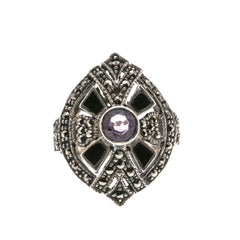 Art Deco Geometry- Vintage Sterling Silver Amethyst, Onyx & Marcasite Ring
Sold
Art Deco Geometry- Vintage Sterling Silver Amethyst, Onyx & Marcasite Ring
Sold
-
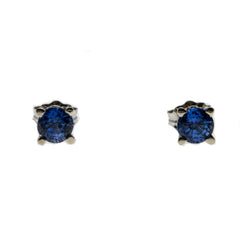 Brilliant Skies - Estate 14K White Gold Natural Blue Sapphire Stud Earrings (EE213)
Sold
Brilliant Skies - Estate 14K White Gold Natural Blue Sapphire Stud Earrings (EE213)
Sold
-
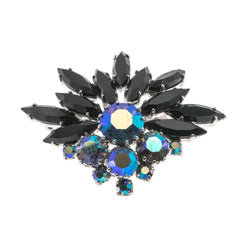 Contrasting Adornment - Vintage Silver Tone Aurora Borealis Crystal Brooch (VBR054)
Sold
Contrasting Adornment - Vintage Silver Tone Aurora Borealis Crystal Brooch (VBR054)
Sold
-
 Date Night - Vintage Retro Sterling Silver Intricate Bracelet (VB121)
Sold
Date Night - Vintage Retro Sterling Silver Intricate Bracelet (VB121)
Sold
-
 Glowing Nature - Estate Sterling Silver Freshwater Pearl CZ Ring (ER229)
Sold
Glowing Nature - Estate Sterling Silver Freshwater Pearl CZ Ring (ER229)
Sold
-
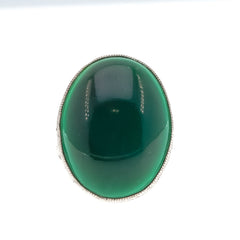 Rainforest - Art Deco Sterling Silver Chrysoprase Ring (ADR210)
Sold
Rainforest - Art Deco Sterling Silver Chrysoprase Ring (ADR210)
Sold